ANJEL Tech
- 3.8
- Rating
- 10.00K
- Installs
- Free
- Price

 Analysis by App-foxy
Choosing a family safety app is less about finding the longest feature list and more about deciding what kind of reassurance you actually need. I approached ANJEL Tech as a communication app for that reason: not as a replacement for every tool on a phone, but as a possible central point for staying connected when family members are apart. My experience was that its appeal depends heavily on your household’s habits. If everyone is willing to use one shared safety-focused service, it can make communication feel more intentional. If your family already relies comfortably on ordinary messaging, calls, and built-in phone tools, the change may feel less worthwhile.
ANJEL Tech is developed by PLURIBUS Inc. and is available free of charge, with optional in-app purchases ranging from $4.99 to $18.99 per item. It is aimed at Everyone, runs on Android from version 6.0 onward, and its current version is 1.1.9. Those details make it accessible to many older Android devices, although compatibility alone does not guarantee that every member of a family will enjoy adopting another communication app.
What I would check before asking my family to install it
Before I invite relatives to rely on a new family channel, I would test the parts that affect everyday follow-through: whether each person can find it easily, notices a check-in, and knows what to do when they cannot reply. I’d also agree on who handles any optional purchases and keep a backup contact method in the routine. That practical trial helps separate a useful shared habit from an app that merely sounds reassuring.
You May Also Like

 Blood Strike: 2.5 Anniversary
Blood Strike’s Loadouts Turn Every Drop Into a Tactical Gamble
A close look at Blood Strike’s custom loadouts: how fast access to signature weapons reshapes its battle royale rhythm, rewards preparation, and narrows the gap between fights.

 Pandora - Music & Podcasts
Pandora’s Music Is Easy to Start, but Harder to Recover
Pandora’s strength is its low-effort path from a seed to a station. Its weak spot is how much confidence it asks you to place in connection, setup, and quiet recovery.

 8 Ball Pool
 Is Built on Rivalries, Rematches, and Routine
A close look at the rivalries, rematches, shared routines, and unanswered safety questions that turn a quick pool match into a persistent mobile community.

 Samsung Music
’s Quiet Strength Is Playing What You Already Own
Its reach comes less from spectacle than from dependable access to a personal library. That simplicity is both the app’s strongest retention engine and its ceiling.

 AccuWeather: Weather Radar
AccuWeather Review: A Quick, Clear Forecast for Everyday Decisions
For everyday plans, the best forecast is the one you can understand quickly. AccuWeather makes rain timing, radar, and local conditions easy to act on, with a few trade-offs.

 Hill Climb Racing
Why Hill Climb Racing Still Turns Crashes Into One More Run
A tiny car, a bumpy hill and one more upgrade: Hill Climb Racing keeps resurfacing because its simple chaos makes every near-miss feel personal.
More From Our News Desk
View All News


Start with the family problem, not the app category
The first question I would ask is simple: what situation are we trying to improve? A parent who wants a dedicated way to stay in touch with children during school travel has a different need from an adult caring for an older relative. Someone who only wants a quick group chat may be better served by the messaging service already used by the family. ANJEL Tech makes more sense when the household wants communication to be associated with personal security rather than casual conversation alone.
I also found that adoption is the real test. A safety tool is useful only when the people who need it remember to open it and understand how the family expects to use it. Before installing it, I would agree on a small routine: who checks in, when a message should be answered, and what to do if somebody cannot respond. That preparation is more valuable than treating the app as an automatic substitute for judgment.
Another practical criterion is device variety. Because the app supports Android from version 6.0, it can suit households with a mix of newer and older Android phones. That is helpful for families that do not upgrade devices at the same time. Still, I would test the experience on every important phone before depending on it during travel or an emergency. A service can work well on one handset and feel less convenient on another because of screen size, notification settings, or the user’s familiarity with Android.
Think about communication habits and urgency
I would separate routine reassurance from urgent help. A short “I arrived” message, a planned check-in, or a family conversation can live inside a shared communication routine. A serious emergency should never depend on one app alone. Phone calls, local emergency services, and the device’s built-in emergency functions remain important backups. The safest setup is layered, not app-dependent.
This distinction also helps avoid a common mistake: installing a family safety app without deciding how much attention it deserves. If every notification is treated as urgent, people may begin ignoring them. If nobody agrees to look at the app, it becomes decorative. I would keep the household rules narrow and realistic, especially for teenagers who may resist a tool that feels like constant supervision.
Understand the financial decision early
The free entry point lowers the barrier to trying ANJEL Tech, but the optional purchases matter when comparing it with familiar alternatives. I would not begin by assuming that every family needs to buy something. Instead, I would first see whether the basic experience fits the household’s communication style. Only after that would I consider whether a paid item solves a clearly identified need.
This approach avoids paying for reassurance that the family does not actually use. It also makes the decision easier to explain to other adults in the household: install it, test the routine, and discuss any purchase only when the benefit is concrete. Since individual items fall between $4.99 and $18.99, the sensible comparison is not simply “free versus paid,” but whether the added cost is preferable to continuing with the tools already on everyone’s phones.
Where the focused approach can be useful
The strongest idea behind ANJEL Tech is its focus. Ordinary messaging apps are designed for broad social communication, while a family safety service can give a household a clearer reason to open it. That difference matters for people who want a dedicated family channel rather than another general-purpose inbox filled with work, friends, shopping alerts, and group conversations.
In my view, the app is most promising for families that want to establish a shared habit around checking in. It may also help when relatives have different levels of technical confidence, because a single agreed-upon destination can be easier to explain than a scattered collection of chat groups and phone settings. The value is less about replacing every conversation and more about giving safety-related communication its own place.
A realistic example would be a family with a child attending an after-school activity and a parent arriving later than usual. Instead of mixing the update into several unrelated chats, the household could use its agreed channel for a simple arrival message. If the child forgets, the parent has a known place to look first. That does not guarantee a response, but it reduces the uncertainty caused by using several different channels.
Three practical habits that improve the experience
- Use a check-in vocabulary. Agree on short, familiar messages such as “left,” “arrived,” or “call me.” A shared vocabulary makes the service easier for children and older relatives than expecting them to write detailed explanations every time.
- Keep the app for meaningful updates. If every joke, photo, and minor question moves into the safety channel, important messages can become harder to notice. Separating ordinary family chatter from safety-related communication preserves the app’s purpose.
- Rehearse the backup plan. Ask each family member what they would do if they could not use the app. Practicing a phone call or another agreed method exposes gaps before a stressful situation occurs.
These habits are not hidden buttons or secret settings, but they are the kind of practical details that determine whether a communication app helps in daily life. The software cannot create a reliable family routine by itself. It can support one when the household defines the routine first.
Where the experience may feel limited
My main reservation is that a focused safety app has to justify the extra step of opening it. People already have phone calls, text messages, email, and familiar messaging platforms. If ANJEL Tech does not become the place where everyone naturally responds, the family may end up checking multiple services anyway. That creates the exact uncertainty the app is meant to reduce.
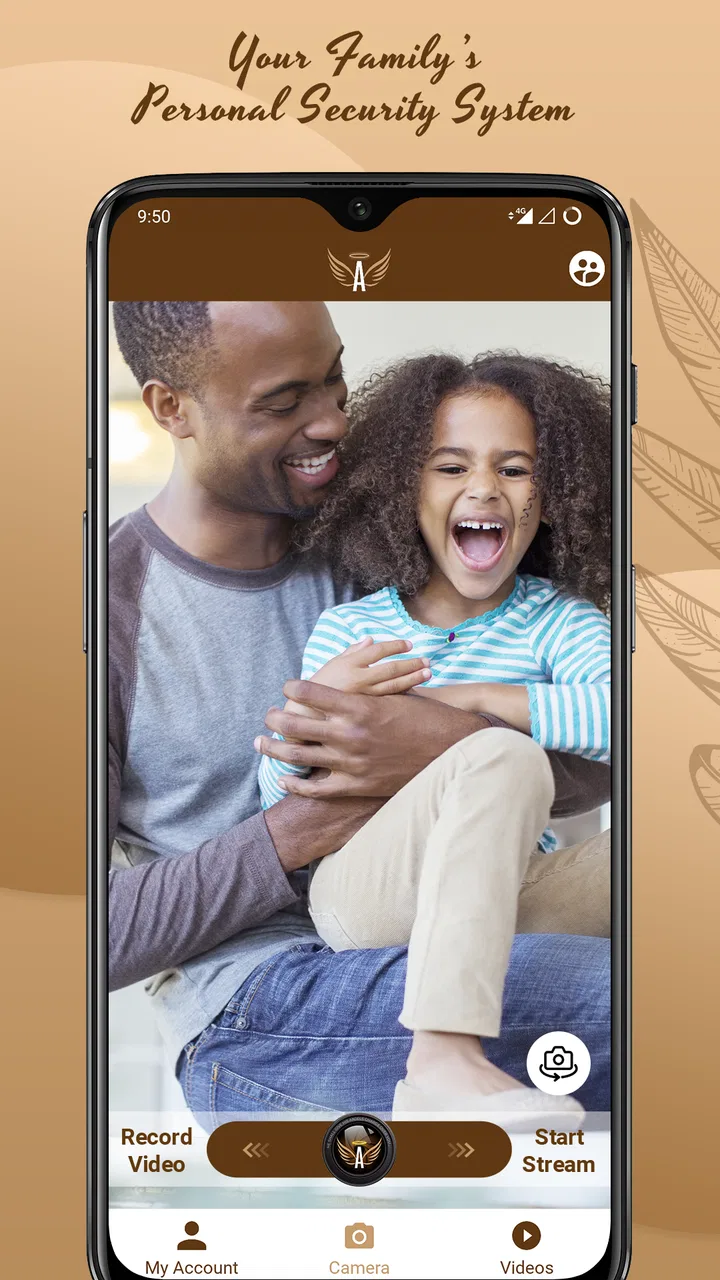
I would also be careful about treating the store summary, “YOUR FAMILY’S PERSONAL SECURITY SYSTEM,” as a promise of complete protection. I read it as a statement of purpose, not as a reason to abandon common-sense precautions. No app can know whether a person is genuinely safe simply because a device is switched on, and no digital check-in replaces direct contact when circumstances look serious.
The average rating is 3.8 from around 73 ratings, with around 31 written reviews, while the app has passed 10K+ installs. I see those figures as signs of a modest user base rather than proof that it will fit every family. They may encourage a trial, but I would give more weight to whether the people in my own household can use it comfortably and consistently.
How it compares with the usual alternatives
I compare a family-focused communication app with tools people already know, because convenience often decides whether anyone keeps using it. The key trade-off is a dedicated place for safety-related updates versus the familiarity and reach of calls, texts, and general messaging; a location-oriented service serves a different need again. Thinking through those distinctions makes it easier to see whether a new shared channel would genuinely reduce confusion.
When a standard messaging app is the better choice
If your family already answers quickly in a familiar messenger, switching may add friction without adding much practical value. A standard service is often better for mixed conversations, sharing photos, coordinating plans, and keeping one broad family group active. Its biggest advantage is habit: people do not need to remember a new destination.
The trade-off is that safety-related updates can disappear among casual messages. A general chat also tends to grow into a noisy archive, which makes it less suitable when you want a narrow, predictable check-in routine. ANJEL Tech is more attractive when that separation matters enough to justify asking everyone to adopt it.
When phone calls and text messages are preferable
For urgent contact, the phone’s basic functions remain hard to beat. A call is direct, and a text message may reach someone who does not regularly open a separate app. These options are especially sensible for relatives who are uncomfortable with new software or who use their phones mainly for calls.
The weakness is organization. Calls and texts do not automatically create a shared family process. Information may remain between two people instead of being visible to the household, and a text thread can be easy to overlook. I would choose ANJEL Tech over basic messaging only when the family benefits from having a dedicated, agreed communication space.
When built-in device safety tools are enough
Modern phones often include emergency contacts and other safety-related functions. Those tools can be the better option for someone who wants the fewest installations and a direct relationship with the device itself. They are also useful as a backup even for people who adopt ANJEL Tech.
The difference is that built-in functions are usually centered on an individual phone, while a family communication app is intended to support a shared routine. If your priority is configuring one person’s emergency access, start with the phone’s own tools. If your priority is regular family check-ins, a dedicated communication service may feel more appropriate.
When a location-focused service fits better
Some households are primarily looking for location sharing. In that case, a service designed specifically around maps, journeys, or live location may be a more direct match. I would not choose ANJEL Tech simply because its security-oriented positioning sounds reassuring if the real requirement is continuous location visibility.
Conversely, location sharing can be too intrusive for families that only want occasional reassurance. A communication-centered approach may feel more respectful when the goal is to let people report their status voluntarily rather than monitor every movement. This is an important trade-off for teenagers and adults who want safety without turning the phone into a tracking device.
What switching really costs
The cost of switching is not limited to optional purchases. It includes teaching relatives where to look, deciding who should respond, handling missed messages, and maintaining the routine after the initial enthusiasm fades. For a small household that already communicates well, that effort may outweigh the benefit.
For a family with scattered habits, the same effort could be worthwhile because it creates a common starting point. I would run a short trial during an ordinary week rather than introducing the app for the first time on a trip. Ask whether everyone notices the messages, understands the expected response, and remembers the backup method. If those answers are negative, the problem is probably the workflow rather than the number of features.
It is also wise to decide who manages any purchases. A family should know whether one person is paying, whether the item benefits everyone, and whether the free experience is enough. Discussing that before checkout prevents a safety tool from becoming a source of confusion or disagreement.
Who should try it
I would recommend trying ANJEL Tech if your family wants a dedicated communication space for safety-related updates, has enough shared trust to agree on check-ins, and is willing to build a small routine around the app. It is especially suitable for households that find ordinary group chats too cluttered but do not want a heavily monitoring-oriented solution.
I would skip it if nobody in the family wants another app, if urgent communication is the only goal, or if the household’s real need is detailed location tracking. In those cases, calls, texts, built-in phone safety tools, or a more specialized location service may be clearer and easier to maintain.
My recommendation after weighing the trade-offs
ANJEL Tech is worth a careful trial, not a blind commitment. Its free availability makes testing straightforward, and its communication focus gives it a distinct role for families that want safety updates separated from everyday social messaging. The developer, PLURIBUS Inc., has positioned it in a space where the quality of the family routine matters as much as the software itself.
I would install it on the relevant Android phones, agree on one realistic use case, and use it for routine check-ins before considering any optional purchase. I would also keep ordinary calls and the phone’s emergency functions ready as backups. That method answers the questions that matter most: will everyone remember to use it, will messages be noticed, and does the dedicated channel genuinely reduce confusion?
My final view is cautiously positive. ANJEL Tech can be a useful family communication layer when the household wants a clear safety purpose and is prepared to participate. It is not the right answer for every family, and its value disappears if adoption is inconsistent. Choose it for the routine it enables, not for the promise of automatic protection. If that routine matches your needs, the app deserves a place in your trial list; if not, familiar communication tools may remain the more dependable choice.
FAQs for ANJEL Tech
01What is ANJEL Tech, and what can I use it for?
ANJEL Tech is a technology-focused application designed to provide users with access to its available digital tools, services, or platform features in one place. The exact experience may depend on the version, region, and account type. Before downloading, review the official description and screenshots to confirm that its functions match your needs and that your device is supported.
02Is ANJEL Tech free to download and use?
ANJEL Tech may be available to download at no initial cost, but some features or services could require registration, in-app purchases, subscriptions, or payment through an associated service. Pricing and available options can change over time and may vary by country. Check the app store listing carefully before installation, especially the payment terms and renewal conditions.
03Does ANJEL Tech require an account or internet connection?
Depending on the features you want to use, ANJEL Tech may require users to create an account, sign in, or provide basic personal information. An active internet connection may also be necessary for loading content, synchronizing data, receiving updates, or using online services. Some functions may work offline, but users should not assume that the complete app is available without connectivity.
04Is ANJEL Tech safe and trustworthy to install?
Download ANJEL Tech only from an official Android or iOS store and verify that the developer name matches the legitimate publisher. During setup, review the permissions requested and avoid granting access that seems unrelated to the app’s purpose. It is also worth reading the privacy policy, recent user reviews, and update history before entering sensitive information or connecting external accounts.
05Which devices are compatible with ANJEL Tech?
Compatibility depends on the operating system, minimum software version, device hardware, and the app’s current release. Before downloading, check the official Google Play or Apple App Store page for supported Android and iOS versions, required storage, and any regional restrictions. Keeping your device updated can improve installation and performance, although older phones may experience slower operation or limited features.
Pros
- Simple interface makes core tools easy to find and use.
- Lightweight design should work well on many Android devices.
- Useful features are grouped logically for quicker navigation.
- Regular updates can improve stability and introduce helpful refinements.
- Suitable for users who prefer a focused
- uncluttered app experience.
Cons
- Some features may require an internet connection to work properly.
- Advanced users may find the customization options somewhat limited.
- Performance can vary depending on device age and available resources.
- The app may request permissions that users should review carefully.
- Support and documentation may not cover every troubleshooting question.

ANJEL Tech
Gallery